March 9, 2026
March 9, 2026
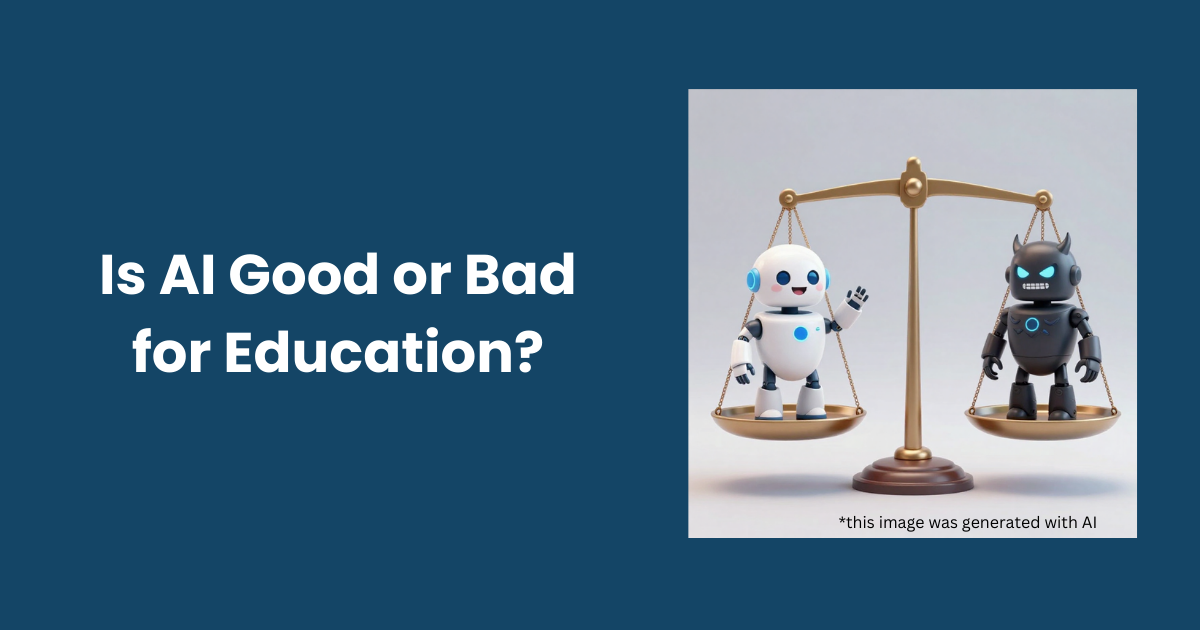
In the few short years since ChatGPT emerged, it already feels as though AI is ubiquitous. With AI potentially upending how we work (and live), including many aspects of the education ecosystem, it is natural to want to ask, "Is AI good or bad for education?"
Answering this question isn't really helpful; it doesn't give us a way forward in education. If it's bad, then we ban it, which is impractical and fails to prepare students for their future. If it's good, we just let it do everything for students, which is not good either. This philosophical question is too simplistic. It compels us to judge AI; we either embrace the growing presence of LLMs into how and what we teach, or we reject and ignore it.
So what questions will actually help guide us to practical solutions in the classroom?
"How do we use AI in education for good?"
In a 2024 survey by the Digital Education Council, 86% of students use AI with schoolwork, with 54% using it weekly and 24% using it daily. It shouldn’t be the centerpiece of lesson plans, but if students are using it, we should have an awareness of how learners are leveraging (or potentially misusing) this technology. We as educators need to understand AI's strengths and pitfalls and how it fits in pedagogically to make sure we are setting up the correct classroom culture, norms, and expectations for students around AI.
Beyond subject mastery, we must prepare our students to be global citizens with the skills to navigate a changing world. Since AI is in a relatively nascent stage, now is the right time for educators to determine how to incorporate AI responsibly, ethically, and effectively in our classrooms — before policymakers without teaching experience do it for us.
It's also worthwhile to consider, "What should you use AI for?"
This is perhaps the most important question — and also the most complex to answer.
As a former teacher and school technology director, I firmly believe that each classroom is unique and the human teacher is the most important factor in a student's success. Therefore, each educator must reflect on these questions individually and choose tools that fit their learning objectives. Learning comes first, technology second. We should leverage AI that will help our students learn, but we should also be careful not to employ technology that shifts the responsibility of thinking away from students.
There is no better way for students to learn than through productive struggle.
What's Coming Next
Over the next couple of weeks, we'll provide a framework that school and district administrators and educators can use to both evaluate AI tools for their classroom and share best practices for implementing those tools effectively.
Start using CheckIn AI today and see how authentic conversations can help you understand your students better, without the grading grind.
We use cookies to analyze our traffic and enhance your experience. By clicking "Accept", you consent to our use of cookies.